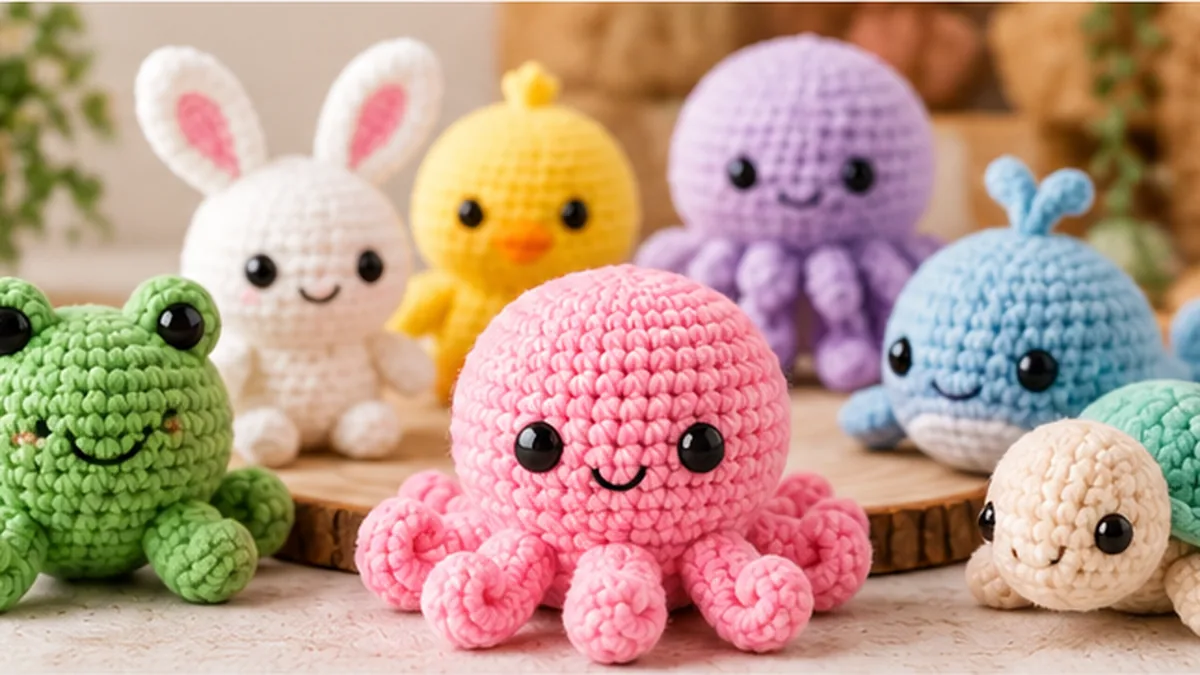
No sew amigurumi patterns are one of the easiest ways to make cute crochet animals and plushies without spending extra time attaching lots of separate pieces. Instead of crocheting the head, body, legs, ears, and tail separately and sewing everything together at the end, many no-sew designs build most of the shape directly into one continuous piece.
This makes them especially useful for beginners, quick gifts, craft-market projects, keychains, small plushies, and anyone who enjoys crocheting but dislikes assembly. Some designs are completely no-sew, while others are better described as low-sew because they may require one or two small pieces to be attached.
What Is No Sew Amigurumi?
No sew amigurumi is a style of crochet construction where the main parts of a toy are crocheted together as you work instead of being made separately and sewn on later. Legs can be formed with bobble stitches, ears can be crocheted directly into a round, fins can be built into the body, and color changes can create details without extra pieces.
The exact construction depends on the project. A small octopus may be worked almost entirely in one piece, while a bunny might still need a tiny tail or ears finished separately. For this reason, always read the pattern notes carefully. “No sew” should mean that assembly is eliminated or reduced as much as possible, not that every design uses exactly the same technique.
Why No Sew Amigurumi Is Great for Beginners
- Less assembly: fewer pieces means fewer placement mistakes.
- Faster projects: small plushies can often be completed in one sitting.
- Simple shapes: many designs use basic single crochet rounds.
- Fewer finishing steps: there are fewer yarn tails and seams to hide.
- Easy to repeat: once you understand the construction, you can make several for gifts or markets.
- Beginner friendly: many patterns rely on a magic ring, single crochet, increases, decreases, and simple color changes.
Basic Supplies for No Sew Amigurumi
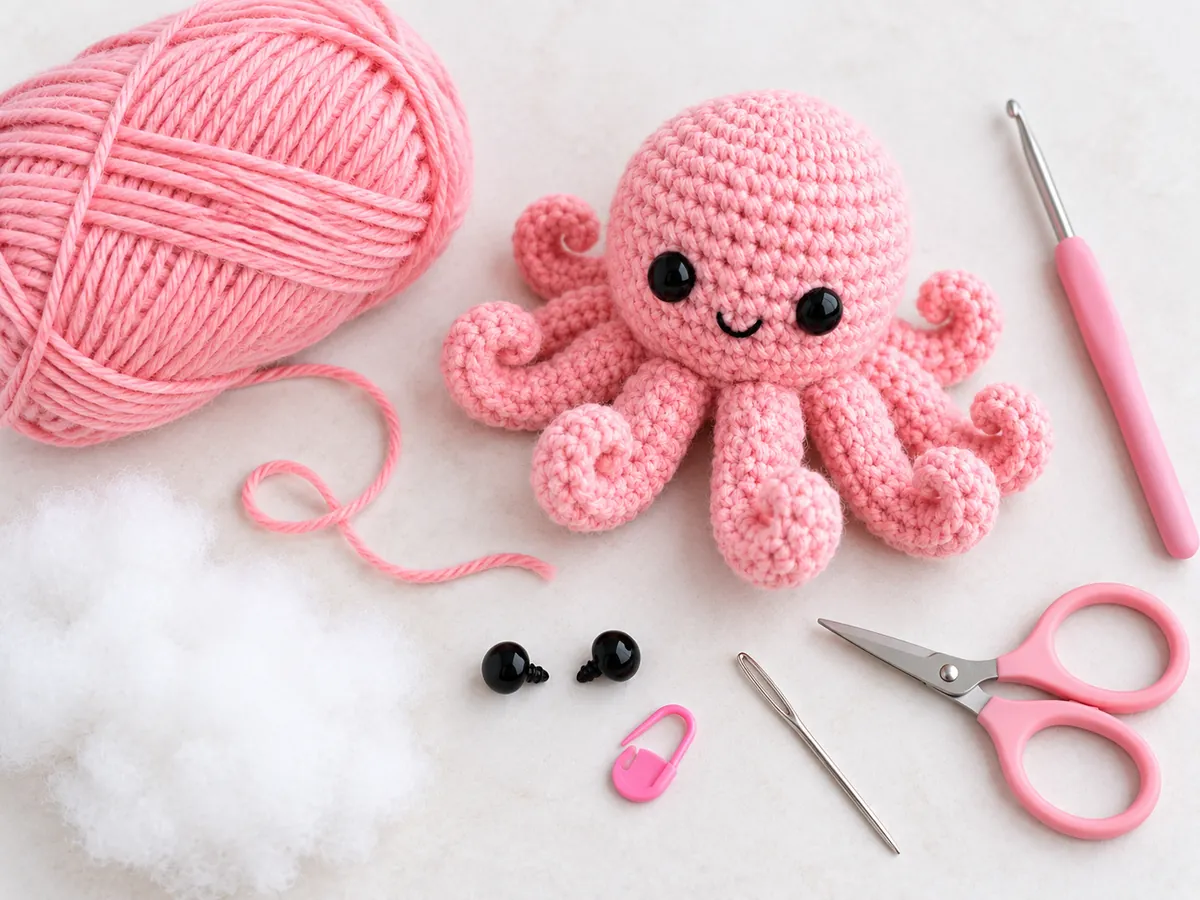
You do not need a large tool kit to start. Most small no-sew crochet animals can be made with yarn, a suitable crochet hook, polyester fiberfill, a stitch marker, scissors, a yarn needle, and either safety eyes or embroidered facial details.
For plush-style amigurumi, chenille or blanket yarn is popular because it creates a soft, rounded shape quickly. Cotton yarn gives smaller stitches and more definition. Acrylic yarn is affordable and easy to find. The best yarn depends on the finished size and texture you want.
15 Easy No Sew Amigurumi Ideas
1. No Sew Octopus
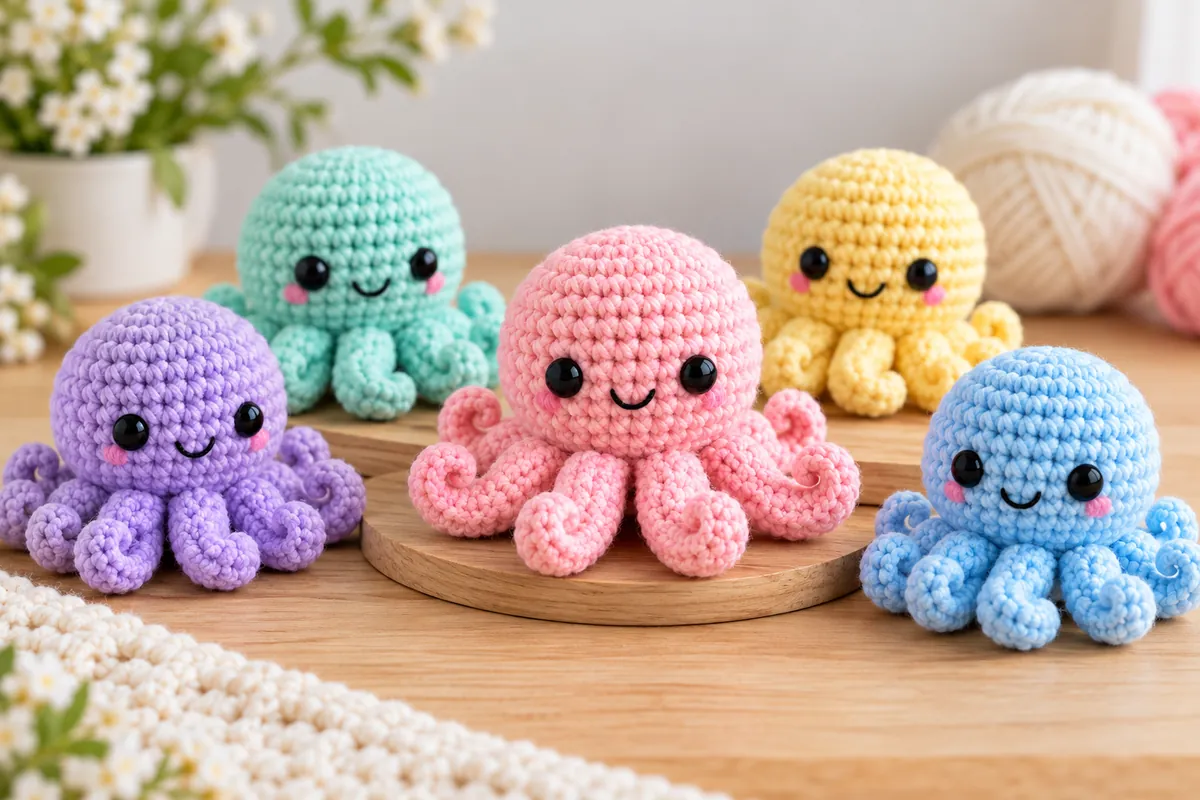
A small octopus is one of the most beginner-friendly no-sew amigurumi projects. The head and body can be worked as one rounded shape, while the tentacles can be crocheted directly from the lower rounds. This removes the need to make eight separate tentacles and attach them individually. Follow our complete No Sew Octopus Crochet Pattern for exact stitch counts, materials, tentacle construction, and finishing steps.
2. No Sew Frog
A frog works well as a compact plush because the legs can be shaped with bobble stitches or short extensions built directly into the body. Raised eyes can also be incorporated into the upper rounds. Small frogs are excellent for leftover yarn and make appealing keychain-size projects. Follow our complete No Sew Frog Crochet Pattern for the full round-by-round instructions, materials, sizing guide, troubleshooting, and beginner tips.
3. No Sew Turtle
A no-sew turtle can combine a simple shell with built-in body features while keeping assembly to a minimum. The shell shape gives the project an instantly recognizable silhouette and is easy to customize with contrasting colors. Follow our complete No Sew Turtle Crochet Pattern for the full shell join, integrated head, flippers, tail, sizing guide, troubleshooting, and beginner tips.
4. No Sew Bunny
A small bunny can be made with a rounded body and ears that are crocheted directly into the upper portion of the project. The feet can be suggested with bobble stitches. A tiny embroidered nose can reduce the number of separate pieces even further.
5. No Sew Cat
Loaf-style cats are particularly suitable for no-sew construction because the long rounded body can be worked continuously while small paws, ears, and the tail are built directly into the project. Follow our complete No Sew Cat Crochet Pattern for exact rounds, integrated paws, surface-crochet ears, tail construction, color variations, troubleshooting, and beginner tips.
6. No Sew Bee
Bees are quick because the main body is a small oval built with simple color changes. In our version, the wings are crocheted directly into a body round and the antennae use surface crochet, so there are no separate pieces to sew on. Follow the complete No Sew Bee Crochet Pattern for exact stripe rounds, integrated wings, clean color changes, sizing, and troubleshooting.
7. No Sew Duck
A duck or chick is a useful beginner project because it relies on a round body, simple color changes, and minimal shaping. Tiny wings can be created with surface stitches or small built-in extensions. Orange yarn can be used for a small beak and feet.
8. No Sew Dinosaur
A small dinosaur works especially well as a no-sew amigurumi because the head, body and tail can flow continuously while bobble stitches form compact limbs. Back spikes can be added with surface crochet instead of sewing on separate triangles. Follow our complete No Sew Dinosaur Crochet Pattern for exact rounds, built-in limbs, tail shaping, surface-crochet spikes, sizing and troubleshooting.
9. No Sew Bear
Compact bears are ideal for no-sew crochet when the ears and limbs are incorporated as you work. A simple round muzzle can be embroidered instead of attached. Using plush yarn creates a soft teddy-bear effect even with a very simple construction.
10. No Sew Whale
A whale is another naturally simple no-sew shape. The rounded body can be worked continuously while the side fins and tail are built directly into the crochet instead of attached later. Follow our complete No Sew Whale Crochet Pattern for the full round-by-round instructions, integrated fins, tail-fluke construction, color variations, and beginner fixes.
11. No Sew Jellyfish
Jellyfish are popular small projects because the head is easy to crochet in continuous rounds. The tentacles can be worked from the lower edge without attaching separate strands afterward. Curly crochet chains are often used to create movement and texture.
12. No Sew Mushroom
A mushroom combines a rounded cap with a short stem and can be adapted to one-piece construction. Color changes create a strong visual effect without complicated techniques. Mini mushrooms also work well as bag charms and decorative crochet pieces.
13. No Sew Penguin
A penguin can be made from a simple oval body using black, white, and orange yarn. Wings can be worked directly into the sides. A color change or embroidered belly detail can replace an extra sewn-on panel.
14. No Sew Cow
Small cows are especially cute in plush yarn. A simplified version can use bobble stitches for legs, built-in ears, and color changes for patches. Embroidered nostrils and facial details keep the number of separate pieces low.
15. No Sew Axolotl
An axolotl has a simple elongated body and recognizable side gills. In a no-sew version, the legs and gill details can be worked directly into selected rounds. Bright colors make this project visually appealing even when the construction is simple.
No Sew vs Low Sew Amigurumi
| Feature | No Sew | Low Sew |
|---|---|---|
| Main body | Usually worked continuously | Usually continuous |
| Limbs | Built into the body | Some may be attached separately |
| Ears or fins | Often crocheted directly | May require minimal sewing |
| Assembly time | Very low | Low |
| Best for | Quick projects and beginners | More detailed shapes with limited assembly |
The difference matters when choosing a pattern. If you strongly dislike sewing, look for designs that clearly explain how the limbs and decorative features are formed during the main construction. A pattern marketed as low-sew may still be very quick, but it can include a few separate pieces.
Best Yarn for No Sew Amigurumi
Chenille and Blanket Yarn
These bulky yarns create soft plushies quickly and make small projects look full and cuddly. They are popular for market-style crochet animals. The main challenge is that the stitches can be harder to see, so beginners should use a stitch marker and count carefully.
Cotton Yarn
Cotton offers excellent stitch definition and is a good choice for smaller amigurumi. It is especially useful when you want crisp details and a firm shape. A smaller hook can help keep the stuffing from showing through the stitches.
Acrylic Yarn
Acrylic is inexpensive, widely available, and comes in many colors. It is a practical option for beginners who want to practice amigurumi without buying specialty yarn.
Crochet Skills You Should Know
- Magic ring
- Single crochet
- Increase
- Invisible decrease
- Slip stitch
- Chain
- Basic color changes
- Working in continuous rounds
- Counting stitches
You do not need to master every decorative stitch before starting. Most beginner-friendly no-sew designs can be completed with single crochet, increases, decreases, and one or two shaping techniques.
How to Get Cleaner Results
- Use a stitch marker. Continuous rounds can be difficult to track without one.
- Count every round. One missed increase or decrease can change the final shape.
- Stuff gradually. Add small amounts of fiberfill instead of pushing in one large clump.
- Do not overstuff. Too much stuffing can stretch the stitches and distort small details.
- Keep tension consistent. Uneven tension is more visible on compact amigurumi.
- Place eyes before closing. Safety eyes usually need to be installed while the inside of the head is still accessible.
- Use embroidered features for very small toys. This can reduce bulk and eliminate more assembly.
Are No Sew Patterns Really Faster?
Usually, yes. The biggest time saving comes after the crocheting is finished. Traditional amigurumi may require pinning several pieces, checking symmetry, sewing each part securely, hiding yarn tails, and correcting placement. A no-sew design moves much of that shaping into the crochet process itself.
However, speed still depends on yarn weight, finished size, stitch complexity, and your experience. A tiny plush made with super bulky yarn can be much faster than a detailed cotton amigurumi even if both are described as no-sew.
Safety Tips for Crochet Plushies
If a crochet toy is intended for a baby or very young child, avoid relying on detachable small parts. Safety eyes can present a hazard if they become loose, so embroidered facial features are often the safer choice for items intended for small children. Make sure all yarn ends are secured and inspect seams and openings before use.
How to Choose Your First No Sew Project
Start with a small animal that has a simple silhouette. Octopus, whale, frog, bee, duck, and loaf-style cat designs are usually easier to understand than projects with long limbs, complicated facial shaping, or many color changes. Choose a pattern with clear stitch counts and photos if you are still learning to read amigurumi instructions.
Once you are comfortable with the construction, move on to more detailed projects such as dinosaurs, cows, axolotls, and seasonal characters. The same core skills repeat across many designs, so every finished plushie makes the next one easier.